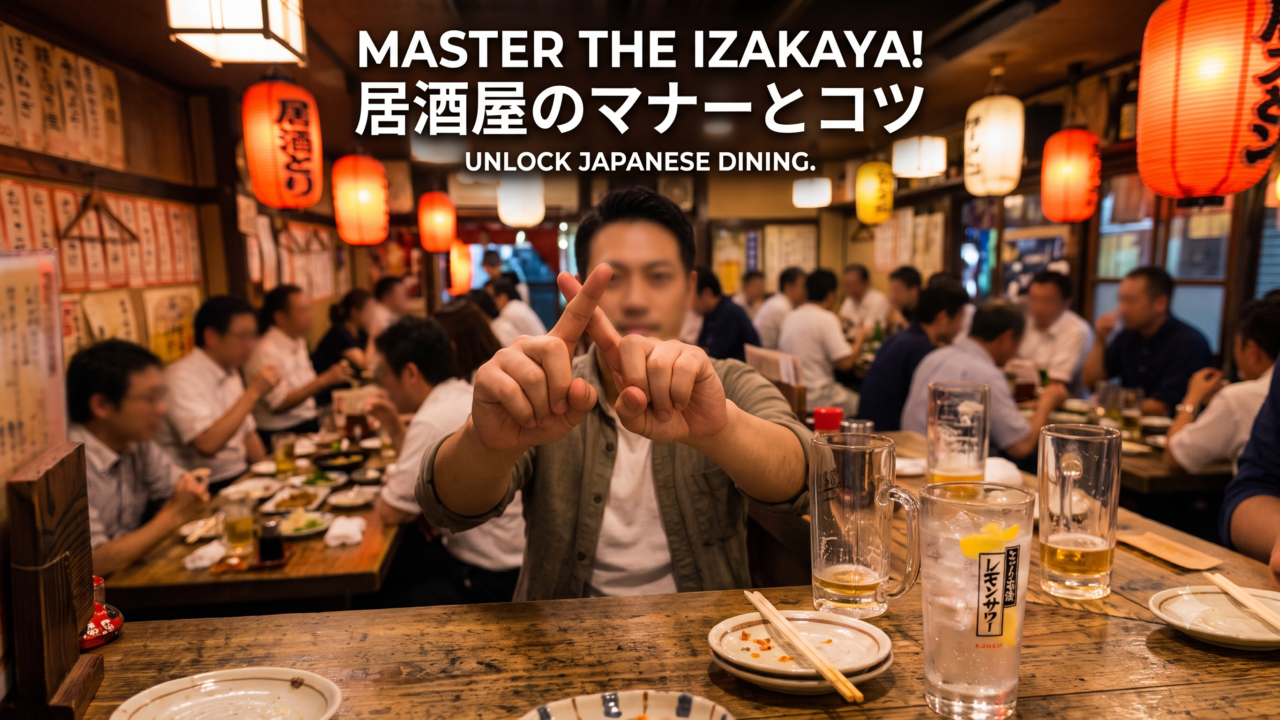
Visiting an “Izakaya” (Japanese gastropub) is an absolute must-do highlight of your nights in Japan. Drawn in by the warm, nostalgic glow of red paper lanterns (aka-chochin), stepping inside rewards you with the lively energy of local office workers unwinding after a long day, the mouth-watering aroma of grilled dishes, and tables packed with a colorful variety of tapas-style small plates.
However, unlike standard Western bars or pubs, Japanese Izakayas come with their own unique ordering systems, unspoken rules, and deep-rooted cultural etiquettes. Walking in without knowing how they work can be a bit overwhelming—but once you unlock the logic behind them, it becomes the most welcoming and fun dining experience in the world.
This comprehensive guide will teach you how to navigate an Izakaya 120% like a seasoned local, dodge common cultural tourist traps, and master beautiful dining manners that will earn you immediate respect. Bookmark this page on your phone so you can check it tonight!
🏮 Part 1: Your First 60 Seconds—The Mystery of “Oshibori” and “Otoshi”
The moment you are guided to your table, before you even have a chance to look at the menu, two things will automatically be brought to you. This is Japan’s unique way of delivering a “first token of hospitality,” but it often puzzles first-time international visitors.
🧼 1. “Oshibori” — Cleanse Your Hands First
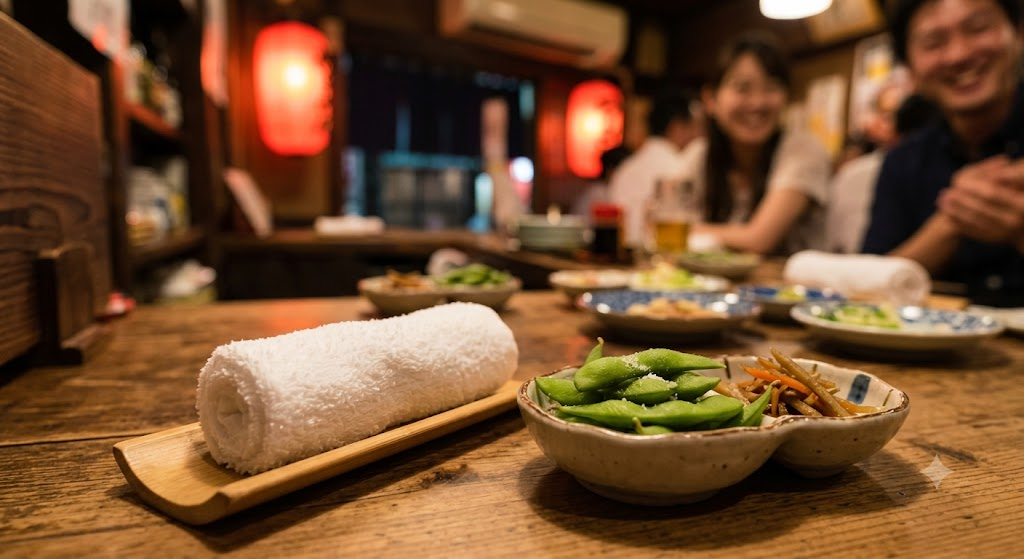
First, the staff will hand everyone a wet, rolled-up cloth towel, which is steaming hot in the winter and delightfully chilled in the summer. This is called an Oshibori.
While restaurants in other countries might offer hand sanitizer or paper napkins, the beautiful routine in Japan is to thoroughly wipe your hands with this fresh towel before the feast begins.
💡 A Quick Etiquette Note: Can I wipe my face?
As you look around the Izakaya, you might see local gentlemen blissfully wiping their faces or necks with their hot towels. However, in modern Japanese dining, this is generally considered a bit unrefined and poor manners. An Oshibori is strictly meant for cleansing your hands. Avoid wiping your face, neck, or using it to clean spills on the table; just wipe your hands, fold it neatly, and set it aside.
🔴 2. “Otoshi” — The Un-Ordered Welcome Dish
Almost simultaneously with the towel, tiny small plates (kobachi) will be placed in front of every person at the table. Depending on the shop, this could be freshly boiled edamame, kinpira gobo (savory braised burdock root), a small scoop of Japanese potato salad, or chilled tofu. Seeing this, many travelers panic and think, “Wait, I didn’t order this—is this a hidden tourist scam?”
Rest assured, it is completely normal! This automatic dish is called Otoshi (or Tsukidashi in the Osaka/Kansai region). It is not an aggressive sales tactic; it serves a dual purpose as the restaurant’s Table Charge and a warm welcome dish (“Thank you for choosing our shop tonight”).
- Why does this system exist?In Izakayas, the kitchen prepares these quick, flavorful bites in advance so you have something delicious to nibble on alongside your first round of drinks while waiting for the mains to cook. Also, because Japan has absolutely no tipping culture, this functions as a seat maintenance fee for occupying the cozy space over a longer evening.
- How much does it cost?It varies depending on how upscale the Izakaya is, but it typically adds about 300 to 500 yen per person (up to 1,000 yen at high-end places) to your final bill.
- Can I decline it?Because it behaves like an admission fee, you generally cannot say no to it. However, if you have severe dietary restrictions or allergies, mentioning it the split-second you sit down might allow flexible kitchens to swap it out for something you can safely enjoy.
🥢 Part 2: The 5 Major “Chopstick Taboos” You Must Avoid
In Japanese culinary culture, how you handle your chopsticks is deeply tied to your social grace and cultural literacy. Especially in a shared space like an Izakaya where everyone eats from common platters, the following five gestures are considered absolute taboos due to historical, spiritual, or religious reasons.
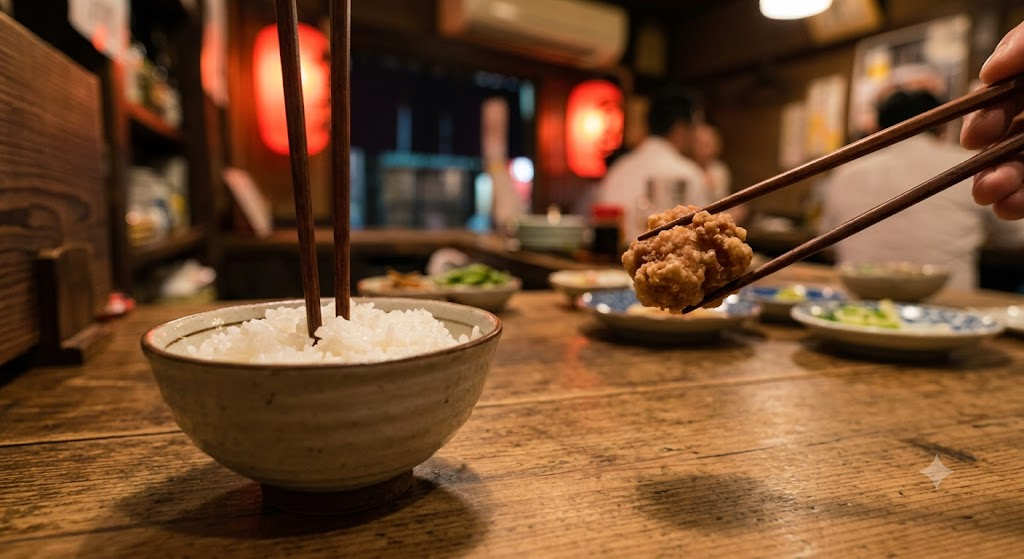
- 1. Tate-Bashi (Standing Chopsticks) ⚠️Sticking your chopsticks completely vertical into a bowl of rice. This heavily mimics Makura-Gohan (pillow rice), a ritual food offered directly at the bedside of the deceased during traditional Japanese Buddhist funerals. Doing this at a lively dinner table is considered extremely unlucky, as it visually evokes death.
- 2. Hashi-Watashi (The Chopstick Bridge Pass) ⚠️Directly passing a piece of food from your chopsticks to another person’s chopsticks. This identical movement is used during the solemn Kone-Age (bone-picking) ceremony at Japanese cremations, where family members gently transfer the remaining bones of their loved one into a funeral urn. If you want to share a delicious bite, never pass it chopstick-to-chopstick; simply place it directly onto their personal small side plate (Torizara).
- 3. Yose-Bashi (The Dish Tug) ⚠️Using the tips of your chopsticks to hook and slide a dish across the table toward yourself. Not only can this scratch or damage beautiful restaurant pottery, but it also looks incredibly lazy. If you want to move a dish, always set your chopsticks down and lift the plate gracefully with both hands.
- 4. Neburi-Bashi (The Chopstick Lick) ⚠️Licking, sucking, or nibbling on the sauce or stray grains of rice stuck to the ends of your chopsticks. It looks unrefined and creates an unhygienic impression for those sharing the table with you.
- 5. Mayoi-Bashi (The Hovering Chopsticks) ⚠️Literally “wandering chopsticks”—waving your utensils around or hovering back and forth over multiple platters while trying to decide what to eat next. It can come across as greedy to your dining companions. Make your choice with your eyes first, and then extend your chopsticks smoothly.
📋 Part 3: What to Order? The Local’s Golden Ordering Sequence
Izakaya menus are notoriously massive, featuring everything from sashimi to deep-fried chicken. To avoid getting overwhelmed, here is the chronological “golden ordering sequence” that locals use to keep the table flowing perfectly.
1.Within 1 Minute: The Speed Menu:Instant Bites。
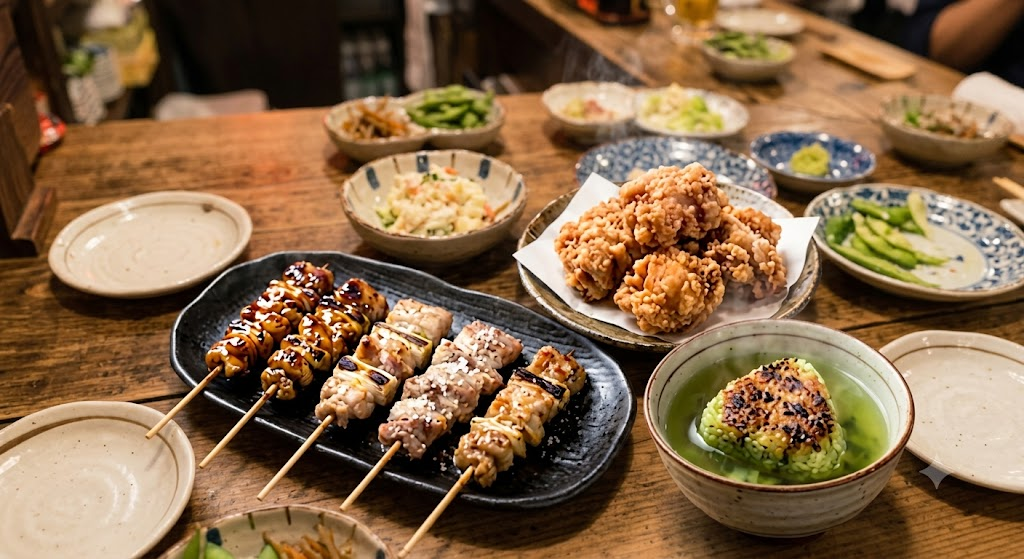
Main cooked dishes (like yakitori or karaage) take time to prepare over the flame. To kick off the night seamlessly, order 2 or 3 instant dishes along with your first round of drinks. Look for the “Speed Menu” section, which includes crowd-favorites like Edamame, Hiyashi Tomato (chilled sliced tomatoes), salted cabbage, or Tako-wasa (wasabi-marinated octopus).
2.Within 10 Minutes: Decoding Yakitori:Tare or Shio?。
When ordering Japan’s iconic grilled chicken skewers, Yakitori, the staff will always ask a crucial question: “Tare or Shio?”
- Tare: A rich, savory-sweet soy-based glaze. Great for deeper flavors like liver or Tsukune (chicken meatballs).
- Shio: A clean, simple shake of high-quality salt. Perfect for appreciating the natural flavor of the meat, like Negima (chicken and scallion) or chicken wings.If you can’t decide, just say “Omakase” (Chef’s choice), and the grill-master will season each specific cut perfectly for you!
3.The Mid-Feast: Hot Comforts & Fried Staples:Sharing Platters。
As the conversation heats up, move on to the heartier, comforting staples of Japanese home-cooking. Order a round of Tori no Karaage (Japanese fried chicken), Nikujaga (savory beef and potato stew), Dashimaki Tamago (sweet-savory rolled omelet), or crispy Tempura. Since Izakaya food is meant for sharing, use your Torizara side plate to portion out small bites for yourself.
4.The Grand Finale: The ‘Shime’ Culture:Carb Reset。
In Japanese dining culture, you never end a night of drinking on an empty stomach. Instead, the night concludes with a final carbohydrate dish known as the Shime (the closing). The classic go-tos are Ochazuke (a comforting bowl of rice submerged in warm dashi broth or green tea), a smoky grilled rice ball (Yaki-Onigiri), or a refreshing bowl of Udon or Ramen. It perfectly settles the stomach and rounds out the feast.
🍻 Part 4: Local Drinking Culture & Tech-Savvy Ordering Tips
🍹 1. Meet Japan’s Favorites: “Sour” and “Highball”
Beyond standard draft beer (Nama-biiru) and traditional Sake, Izakayas are famous for unique drinks that have evolved beautifully within Japan:
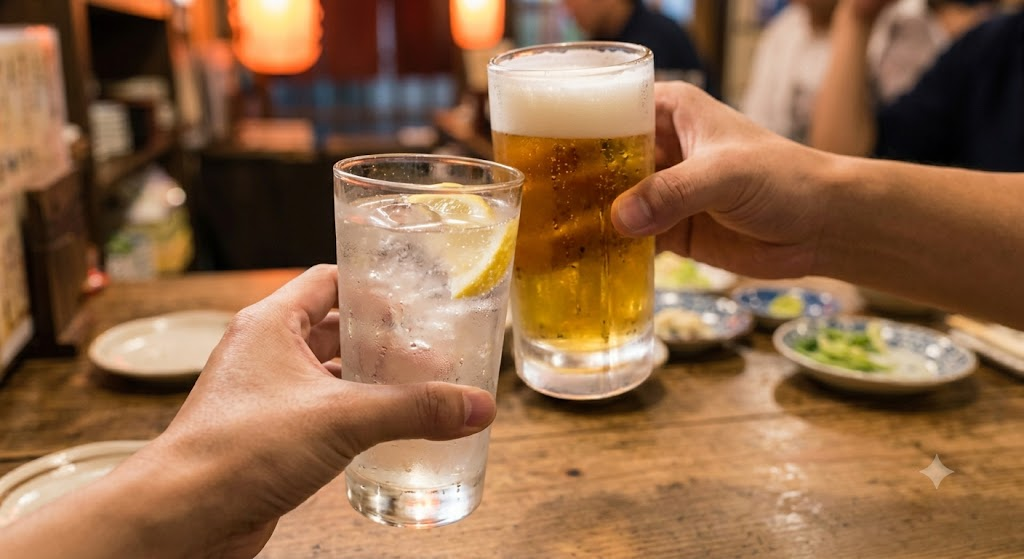
- Sour (サワー) / Chuhai (チューハイ): A highly refreshing drink combining Shochu (a Japanese distilled spirit), carbonated water, and fresh fruit juice. The Lemon Sour is sharp, crisp, and arguably the most beloved Izakaya drink in modern Japan because it cuts through savory food beautifully.
- Highball (ハイボール): Whiskey topped with bubbly carbonated water. Japanese highballs are meticulously crafted, incredibly bubbly, and pair flawlessly with crispy, greasy dishes like fried chicken.
🤝 2. The Art of “Oshaku” (Pouring for Others)
If you are dining with Japanese friends or business partners, pay attention to the beautiful custom of pouring drinks for one another, called Oshaku.
If you notice someone’s glass is getting low, pick up the bottle and offer to refill it. If someone offers to pour a drink for you, the polite custom is to gently lift your glass off the table with both hands as a sign of respect while they pour. This mutual act of mindfulness instantly creates a warm, connected atmosphere at the table.
📱 3. Find Your Ordering Style (Don’t Be Afraid to Ask for English!)
The way you order can change completely depending on the specific Izakaya you choose. Keep an eye out for these styles:
- Direct Staff Interaction: When you’re ready, don’t be shy—raise your hand and call out firmly, “Sumimasen!” (Excuse me!). It’s loud in there, so a confident voice is expected and welcomed.
- Touchscreens or QR Codes (Your Own Smartphone): Highly common in modern shops. You can slowly browse photos of the food and order digitally, making it incredibly stress-free if you don’t speak Japanese.
💡 Pro Travel Tip: Especially in major urban areas and tourist hubs, many Izakayas have multilingual menus hidden away. Even if you only see a Japanese menu on the table, it is always worth asking the staff: “English menu wa arimasu ka?” (Do you have an English menu?). Many places also offer Chinese and Korean versions!
💵 Part 5: Splitting the Bill and the Magic “X” Hand Sign
When the great food is polished off, it’s time to handle the check. Here are a few unique local customs to keep the ending smooth.
🙅♂️ 1. The Universal Hand Sign for the Bill
Depending on the venue, your check will either be handled right at your table (Table Check) or you will take a small plastic clip/slip of paper from your table to the register near the exit.
If the Izakaya is incredibly loud and you want to catch a distant waiter’s attention to request the bill, simply cross your two index fingers into a small “X” shape toward them. This is a brilliant, silent Japanese hand sign that universally means “Check, please!” It works like magic without needing to say a word.
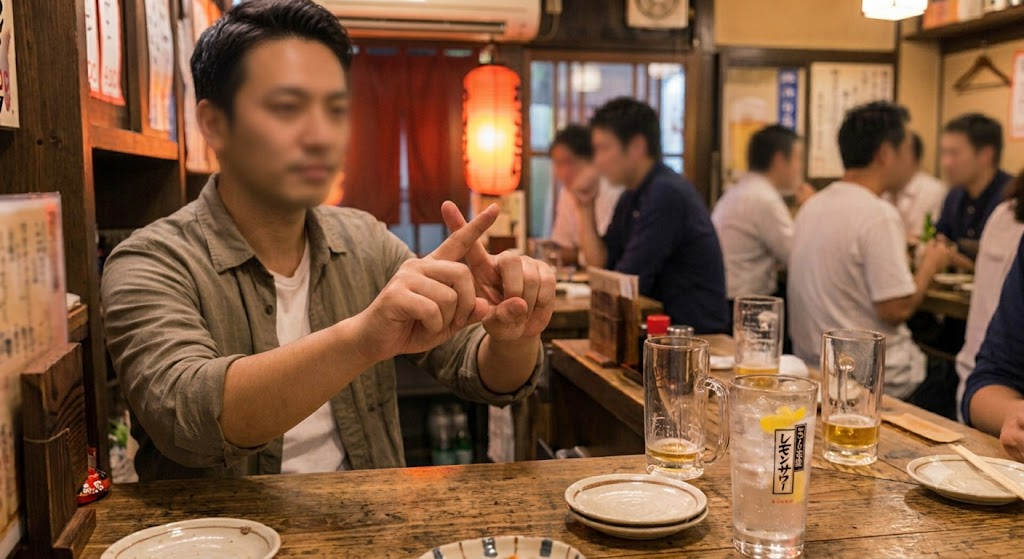
🤝 2. How to Handle “Warikan” (Splitting the Bill)
In Japan, splitting the total bill equally among everyone at the table is a standard cultural norm called Warikan.
However, a major trap for international groups is asking the cashier, “Can we pay separately with four different credit cards?” Because Izakaya billing systems tie everything to a single table number, and because registers can get intensely crowded, most local shops will politely refuse separate card payments.
The smartest and most mature way to handle this is to have one person pay the entire bill with cash or a single credit card, and then have the rest of the group reimburse that person later in cash or via a travel app.
✨ The Invisible Mindset Behind “Itadakimasu”
To truly appreciate Japanese food culture, you must embrace the two phrases wrapped around every meal:
- Itadakimasu (いただきます): Often translated simply as “Let’s eat,” its literal meaning is far deeper: “I humbly receive your life into my own.” It is a profound expression of gratitude toward the lives of the plants and animals (the meat, the fish, the rice) that sacrificed themselves for your sustenance, as well as a thank-you to the farmers, hunters, and chefs who made the meal possible.
- Gochisousama-deshita (ごちそうさまでした): Said at the very end of the meal. The kanji character for Chisou historically means “to ride a horse and run around dynamically.” By saying this, you are expressing deep respect to the host or chef who literally “ran around” to gather fresh ingredients, harvest the fields, and meticulously cook a beautiful meal just for you.
By placing your hands together in front of your chest and softly uttering these words, your dining experience transforms from casual tourist consumption into a beautiful bridge of deep cultural respect. Step past those red lanterns tonight, raise your glass, and enjoy the ultimate taste of real Japanese nightlife!